

Robotic Kidney Surgery in a 2.5-Month-Old Infant: A Landmark Case in Pediatric Urology
Advances in robotic-assisted surgery are allowing surgeons to treat increasingly complex conditions with greater precision and smaller incisions. While these procedures are now well established in adults, their application in very young infants is still uncommon because of the technical expertise required.
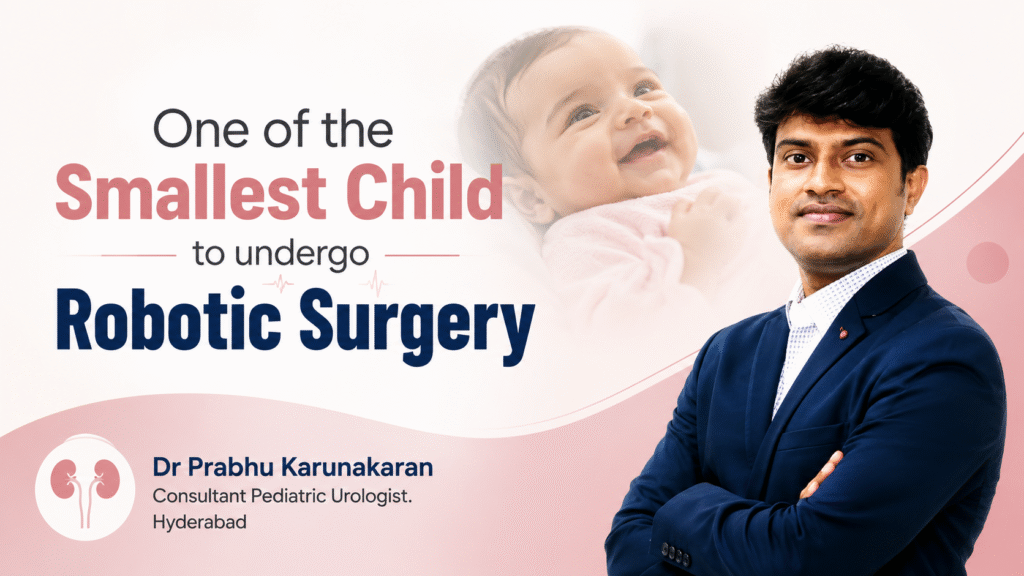
In this remarkable case, Dr. Prabhu Karunakaran, Consultant Pediatric Urologist from Hyderabad, performed robotic surgery on a 2.5-month-old baby girl with a congenital kidney obstruction. The case represents one of the youngest children in India to successfully undergo robotic reconstructive kidney surgery.
What Is PUJO and Why Does It Require Treatment?
The baby was diagnosed with Pelvi-Ureteric Junction Obstruction (PUJO), a congenital condition in which urine cannot flow freely from the kidney into the ureter because of a narrowing at their junction.
As urine accumulates, the kidney enlarges, a condition known as hydronephrosis. Without timely treatment, prolonged obstruction may gradually reduce kidney function and increase the risk of infection.
Doctors may recommend surgery when imaging studies show significant obstruction or when kidney function begins to decline.
Some common findings associated with PUJO include:
- Hydronephrosis detected before or after birth
- Repeated urinary tract infections
- Delayed drainage of urine from the kidney
- Progressive deterioration of kidney function
Early intervention helps preserve kidney health and restore normal urinary drainage.
Why Is Robotic Surgery in Young Infants So Challenging?
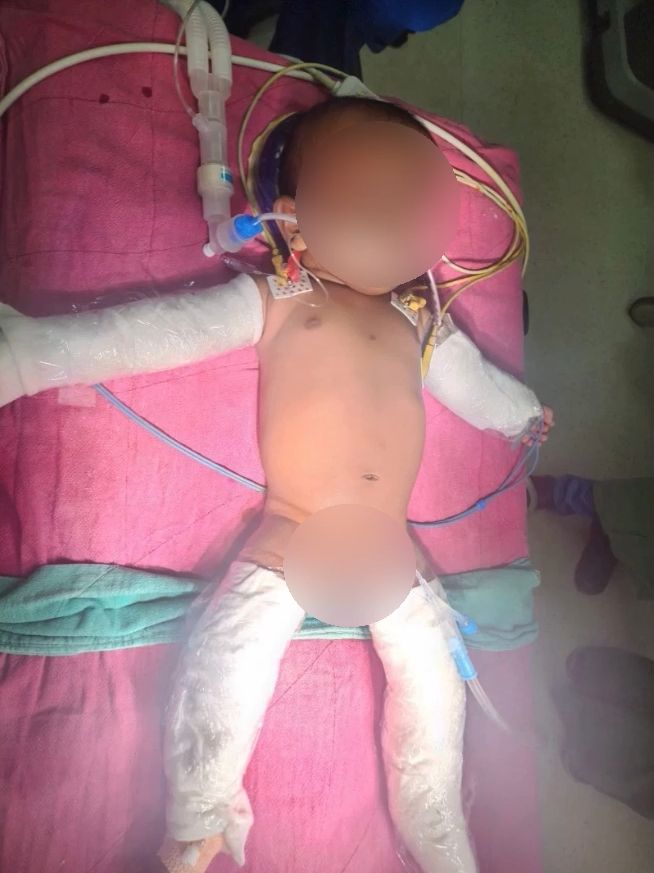
Performing robotic surgery in a baby who is only a few months old is considerably more demanding than performing the same operation in older children or adults.
The surgeon has very limited space to work inside the infant’s abdomen, making every movement critical. Procedures like these require advanced planning, specialized pediatric instruments, and significant experience in robotic reconstructive surgery.
Cases such as this demonstrate how pediatric robotic surgery continues to evolve, allowing surgeons to safely treat even the smallest patients with minimally invasive techniques.
How the Robotic Procedure Was Performed
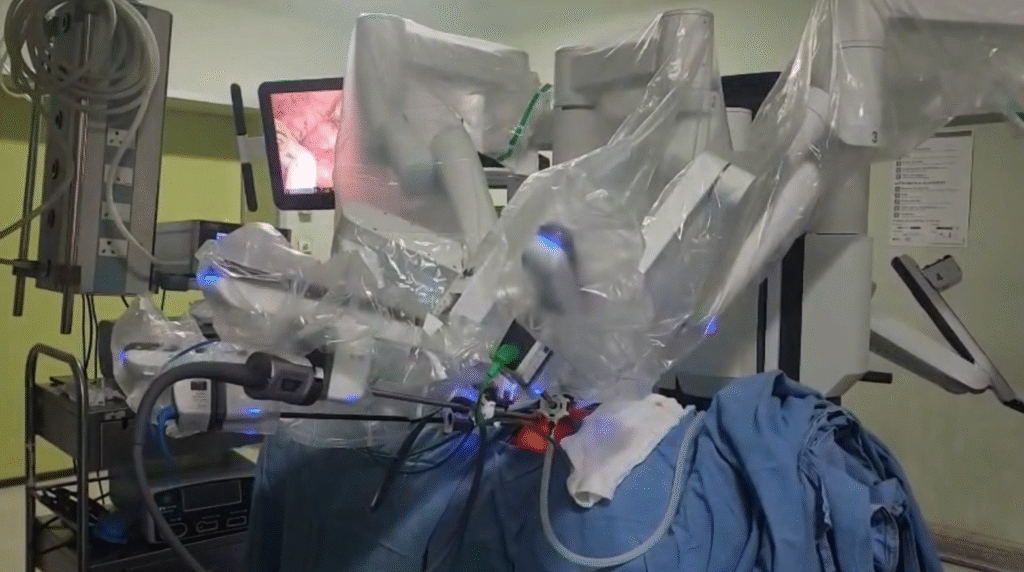
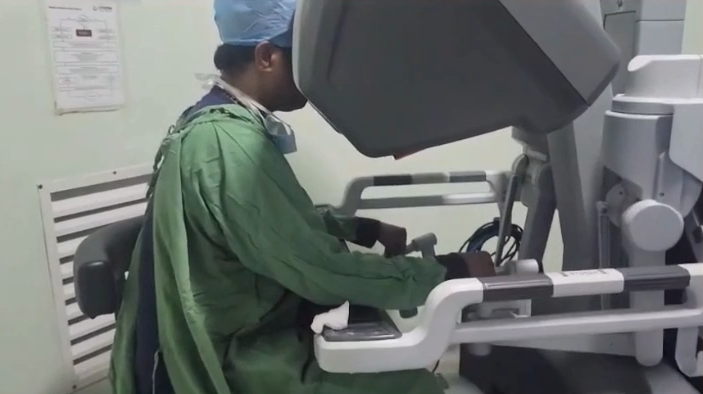
After the baby was carefully positioned, the robotic surgical system was docked, allowing the surgeon to operate from a high-definition robotic console.
The robotic platform enhanced visualization while translating the surgeon’s hand movements into highly controlled, precise movements inside the baby’s body. Specialized instruments used during the operation included: Black Diamond Forceps, Micro Bipolar Forceps
These instruments help surgeons:
- Handle delicate tissues with exceptional precision
- Perform fine reconstructive suturing
- Reduce unnecessary tissue trauma
- Operate safely within extremely small anatomical spaces
It is important to note that the robotic system does not make independent decisions. Every movement is directed entirely by the operating surgeon.
Recovery Within 48 Hours

One of the major advantages of robotic-assisted surgery is the potential for quicker recovery following complex reconstructive procedures.
Only 48 hours after surgery, the baby was comfortably interacting with her parents, smiling, squeezing, and happily babbling during catheter removal. Her recovery reflected the benefits that minimally invasive surgery can offer when performed by experienced pediatric specialists.
Following catheter removal, she was discharged home in stable condition.
Potential benefits of minimally invasive robotic surgery include:
- Less post-operative discomfort
- Smaller incisions
- Reduced hospital stay
- Faster return to normal activity
The Importance of Training and Global Collaboration
Progress in pediatric robotic surgery depends not only on technology but also on continuous learning and mentorship.
Dr. Prabhu acknowledges the guidance and training he received from internationally respected experts in pediatric urology, including:
- Dr. Ansari (SGPGI, India)
- Dr. Mohan Gundeti (University of Chicago, USA)
Such collaborations help introduce advanced reconstructive techniques to children in India while maintaining high standards of surgical care.
Looking Ahead: The Future of Pediatric Robotic Surgery
Robotic-assisted surgery continues to redefine what is possible in pediatric urology. As surgical technology advances and more specialists gain expertise, younger patients with complex congenital conditions may increasingly benefit from minimally invasive procedures.
This successful case highlights how innovation, careful patient selection, and surgical expertise can together deliver excellent outcomes even in extremely young infants.