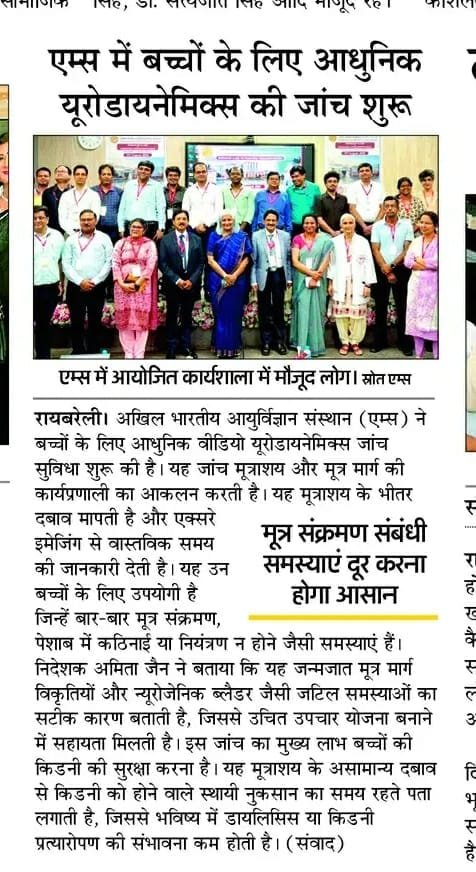

Paediatric VideoUrodynamics Workshop 2026: Dr. Prabhu Karunakaran Discusses Neurogenic Bladder at AIIMS Raebareli
Paediatric urodynamics continues to play an important role in understanding lower urinary tract dysfunction in children, particularly when clinical findings alone do not provide the complete functional picture. Bringing together specialists to discuss how these assessments can be interpreted and applied in practice, the Workshop & CME on Paediatric VideoUrodynamics was held at AIIMS Raebareli on 1 August 2026.
Organised by the Department of Paediatric Surgery, AIIMS Raebareli, the workshop featured a multidisciplinary academic programme covering the evaluation and management of lower urinary tract dysfunction in children. The meeting included discussions on urodynamic assessment, pressure-flow analysis, troubleshooting, biofeedback, neuromodulation and case-based learning, with participation from professionals across paediatric surgery, urology, nephrology, rehabilitation and related specialties.
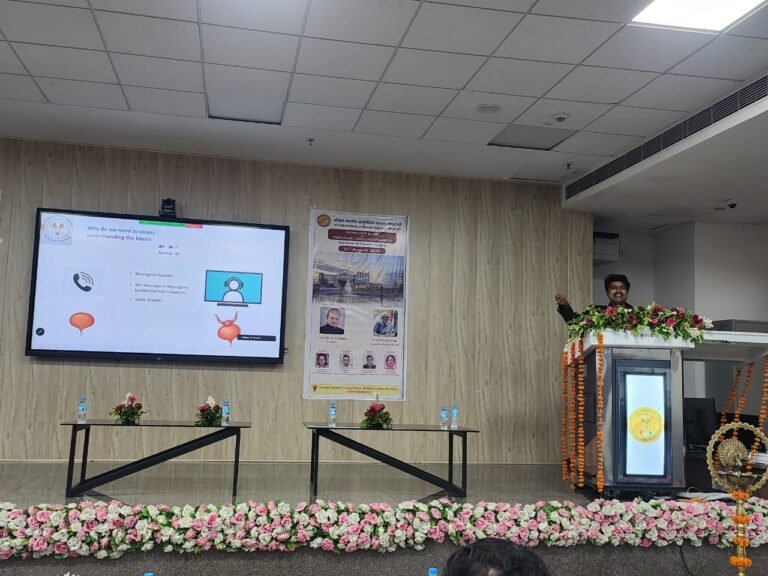
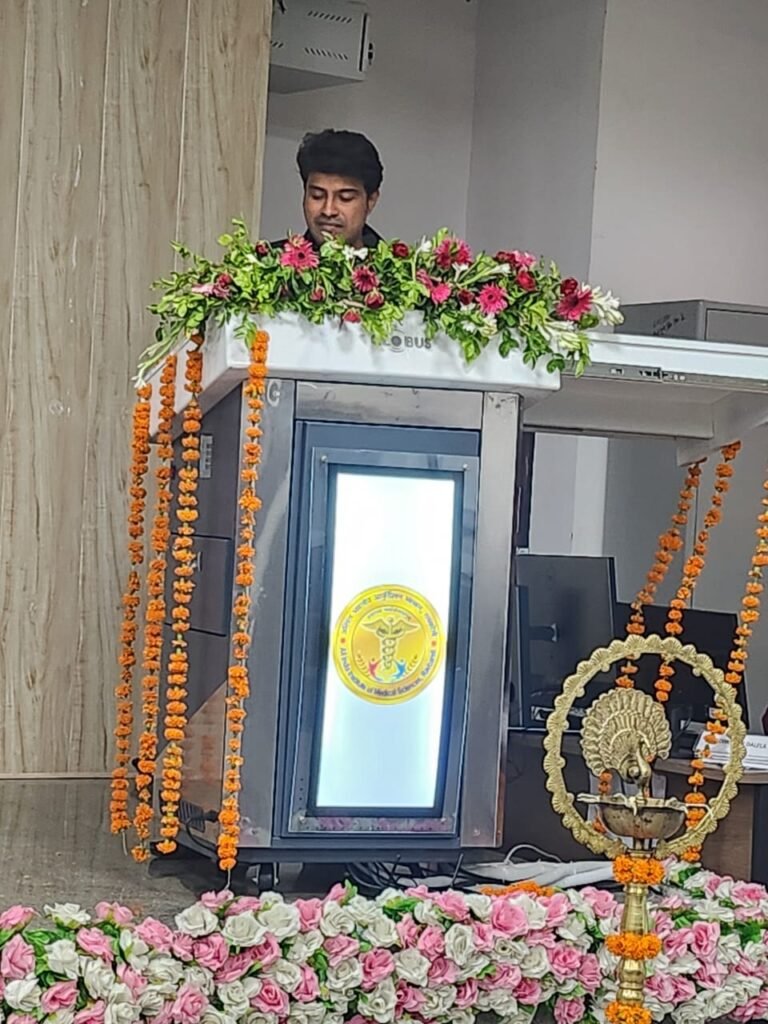
A significant part of the scientific programme was Dr. Prabhu Karunakaran, Paediatric Urologist in Hyderabad, who addressed the classification of neurogenic bladder in children and its correlation with video urodynamic findings. His session formed part of the workshop’s morning programme on the fundamentals of paediatric video urodynamics.
Interpreting Neurogenic Bladder Through Video Urodynamics
Neurogenic bladder in children can present with a complex combination of urinary symptoms and neurological findings. While these clinical features are essential in forming an initial assessment, they do not always predict exactly how the bladder will behave during functional testing.
This was an important focus of Dr. Prabhu Karunakaran’s session, which examined the relationship between clinical classification and video urodynamic findings. Rather than considering the two independently, the discussion centred on using both sources of information together to arrive at a more meaningful assessment of bladder function.
The presentation reviewed established approaches to classifying neurogenic bladders and also considered their practical limitations. Particular attention was given to situations in which the clinical picture may be misleading, as well as the risks of interpreting symptoms or an isolated urodynamic measurement without considering the rest of the study.
Video urodynamics can add another layer of information by providing real-time assessment of bladder filling, voiding and sphincter behaviour. In this context, findings such as detrusor activity, bladder neck function and sphincter behaviour can be considered alongside the patient’s clinical presentation rather than treated as separate pieces of information.
From Urodynamic Findings to Management Planning
The value of this correlation becomes particularly clear when it begins to influence clinical decisions.
During his presentation, Dr. Karunakaran used case-based examples from his practice to demonstrate how combining clinical assessment with video urodynamic interpretation could alter management, from conservative approaches through to consideration of surgical planning.
For clinicians learning paediatric urodynamics, this represents an important shift in emphasis. The goal is not simply to obtain measurements, identify abnormal values or place a child into a diagnostic category. Instead, the findings need to be interpreted in the context of the child’s overall clinical picture.
This approach is particularly relevant for teams establishing or refining a paediatric urodynamics service, where residents, surgeons and urodynamic technicians need a practical framework for moving from the information available in a patient’s history to the physiological behaviour demonstrated during the study.
A Multidisciplinary Programme Covering the Full Spectrum of Paediatric Urodynamics
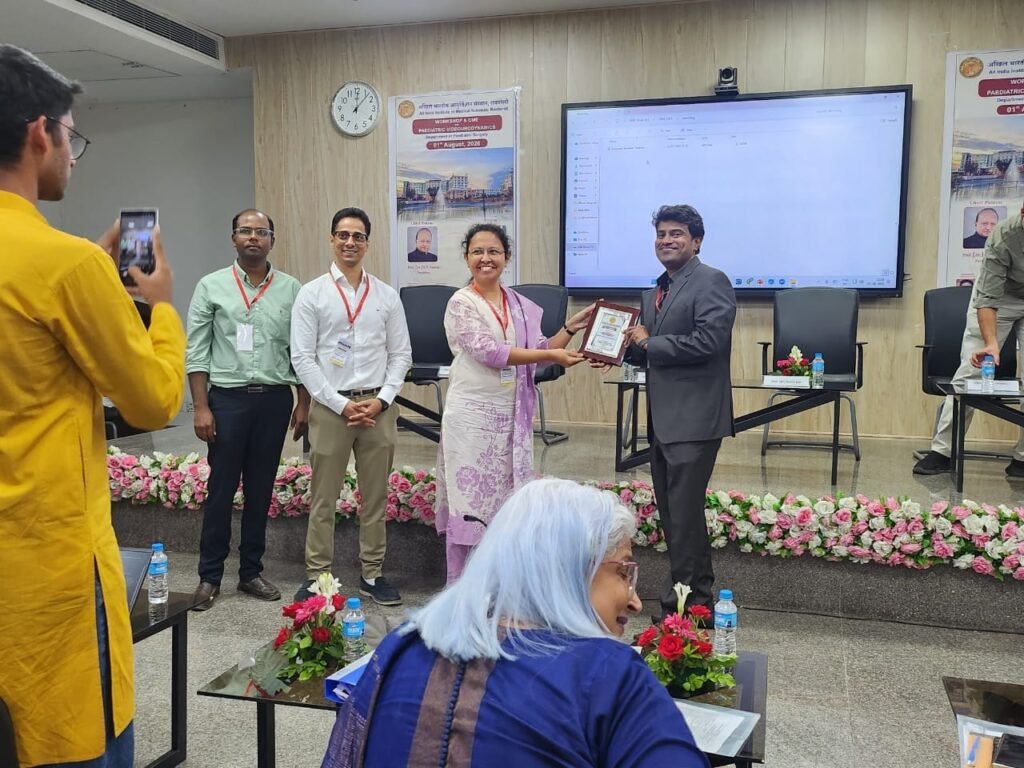
Dr. Karunakaran’s session was one component of a full-day programme that brought together multiple aspects of paediatric bladder dysfunction and urodynamic practice.
The scientific schedule began with foundational topics including urinary sphincteric anatomy, neurogenic bladder evaluation and urodynamic terminology, before moving into practical areas such as urodynamic laboratory setup, early intervention in spina bifida, bladder dynamics after urethroplasty and real-time video urodynamic learning.
The programme then covered medical and surgical management, including the evolving pharmacological treatment of neurogenic bladder and surgical decision-making in children with urinary incontinence. Additional sessions focused on case telecasts, troubleshooting in urodynamics, biofeedback for paediatric voiding dysfunction and neuromodulation for urinary sphincter control.
The later sessions explored recent advances and research, including intravesical monitoring of bladder dynamics, functional near-infrared spectroscopy, complex case challenges and analysis of bladder cytometry and urodynamic findings in neural tube defects. The programme also included the Academic Meet of the Society of Lucknow Paediatric Surgeons, followed by a cultural evening and gala dinner.
Protecting Bladder Function Over the Long Term
The discussion around neurogenic bladder is ultimately about much more than classification.
In children with neurogenic bladder, including those affected by spina bifida, spinal cord anomalies and other neurological conditions, the way bladder function is understood and managed can have long-term implications for renal preservation, continence and quality of life.
Treatment may involve approaches such as clean intermittent catheterisation and medication, while selected children may require surgical intervention depending on their functional status and clinical needs. Accurate assessment therefore becomes an important part of deciding how aggressively a child’s bladder dysfunction needs to be managed.
This is where the practical message of Dr. Karunakaran’s session becomes particularly relevant. Clinical assessment provides the starting point, but video urodynamics can help reveal what is happening functionally and allow those findings to be integrated into the overall management strategy.
For paediatric urologists and other clinicians involved in the care of these children, that means approaching urodynamics not merely as a diagnostic test, but as part of a broader process of understanding bladder behaviour, planning treatment and protecting urinary tract function over time.
The AIIMS Raebareli workshop provided a valuable academic setting for that discussion, combining specialist teaching with practical perspectives on the increasingly important role of paediatric video urodynamics.