
From Pediatric Robotic Surgery to SSi Mantra Training: Dr. Prabhu Karunakaran at TGASICON 2026
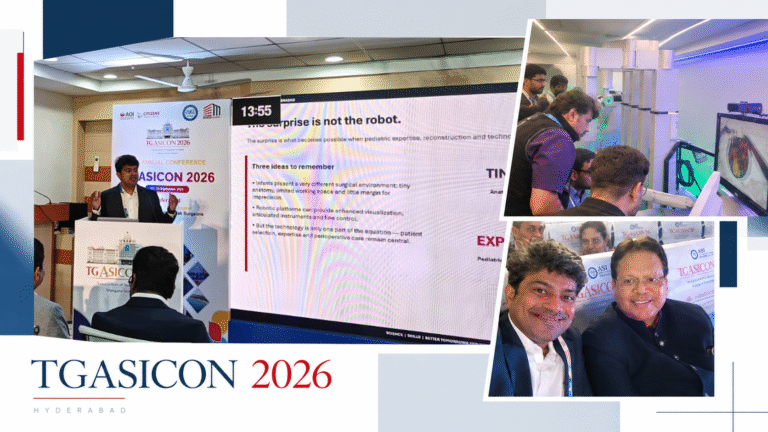
TGASICON 2026 in Hyderabad brought together surgical education, robotic technology and professional exchange, with Dr. Prabhu Karunakaran contributing through a presentation on pediatric robotic urological surgery and hands-on training for general surgery residents on the SSi Mantra robotic system.
The 12th Annual Conference of the Telangana Association of Surgeons of India (TGASICON 2026) was held from 11–13 September 2026 at Engineering Staff College of India (ESCI), Gachibowli, Hyderabad, under the theme “Precision Surgery: Roots in Tradition, Reach for Tomorrow.” The conference programme focused on contemporary surgical practice, academic learning, innovation and professional interaction.
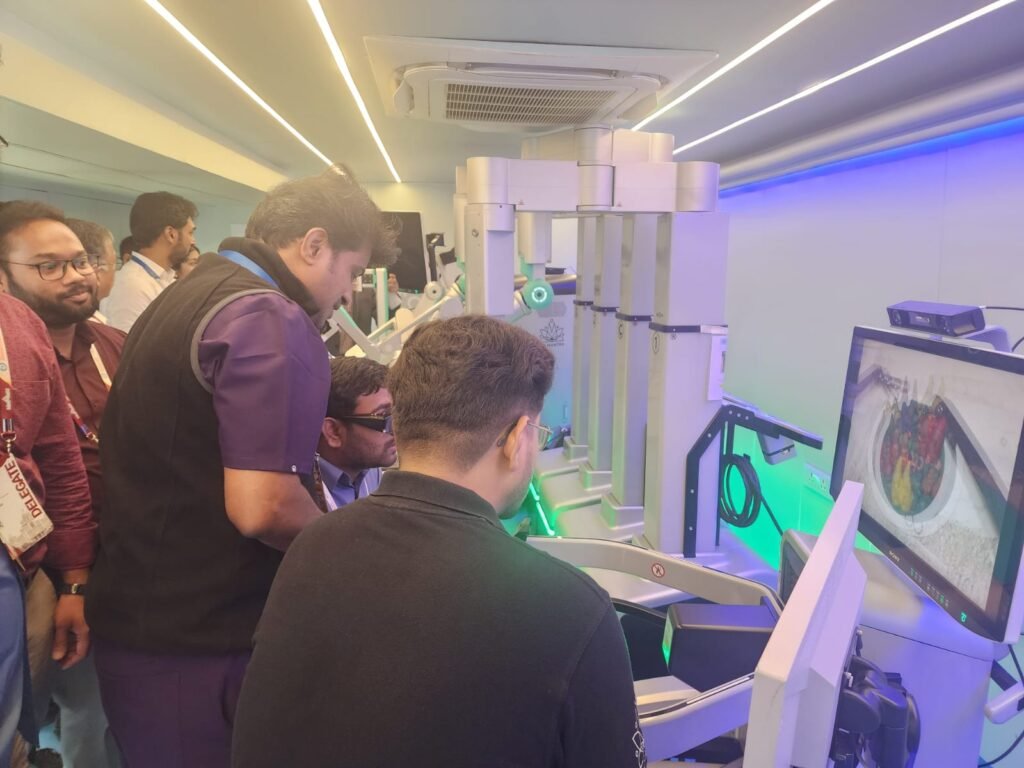
Dr. Prabhu Karunakaran, Consultant Pediatric Urologist & Robotic Surgeon at Apollo Hospitals, Hyderabad, presented “Precision and the Need for Robotic Urological Surgery in Children” and trained general surgery residents from Telangana on the SSi Mantra robotic system in the dry lab.
A Pediatric Urology Perspective on Robotic Surgery
Robotic surgery takes on a particular significance in pediatric urology because children present a different surgical environment from adults. Smaller anatomical structures, restricted working spaces and the requirements of reconstruction make precision an important consideration.
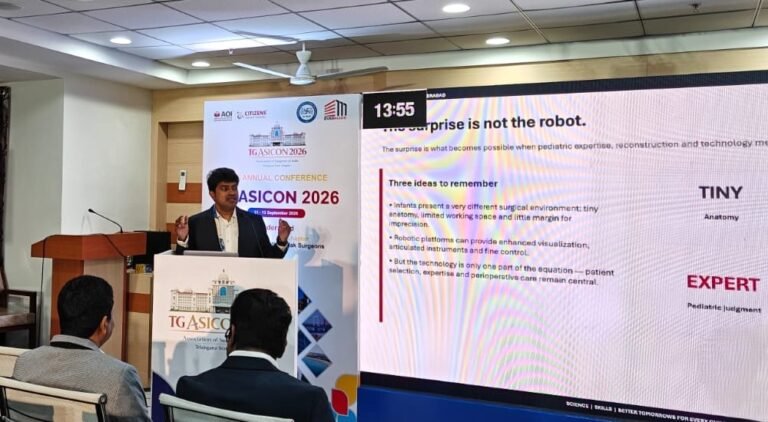
These issues formed the basis of Dr. Karunakaran’s presentation at TGASICON 2026. His discussion focused on the potential role of robotic technology in pediatric urological surgery, including its ability to provide enhanced visualization, articulated instruments and fine control.
At the same time, the presentation placed technology within its proper clinical context. The choice of a robotic approach still depends on the patient’s condition, the procedure being considered, surgical expertise and appropriate decision-making.
The slide photographed during the presentation captured the central thought particularly well:
“The surprise is not the robot.”
The message was that the value of robotic surgery lies in what becomes possible when pediatric expertise, reconstruction and technology come together—rather than in the technology existing by itself.
From the Podium to the Robotic Console
The educational component of Dr. Karunakaran’s TGASICON participation did not end with the presentation.
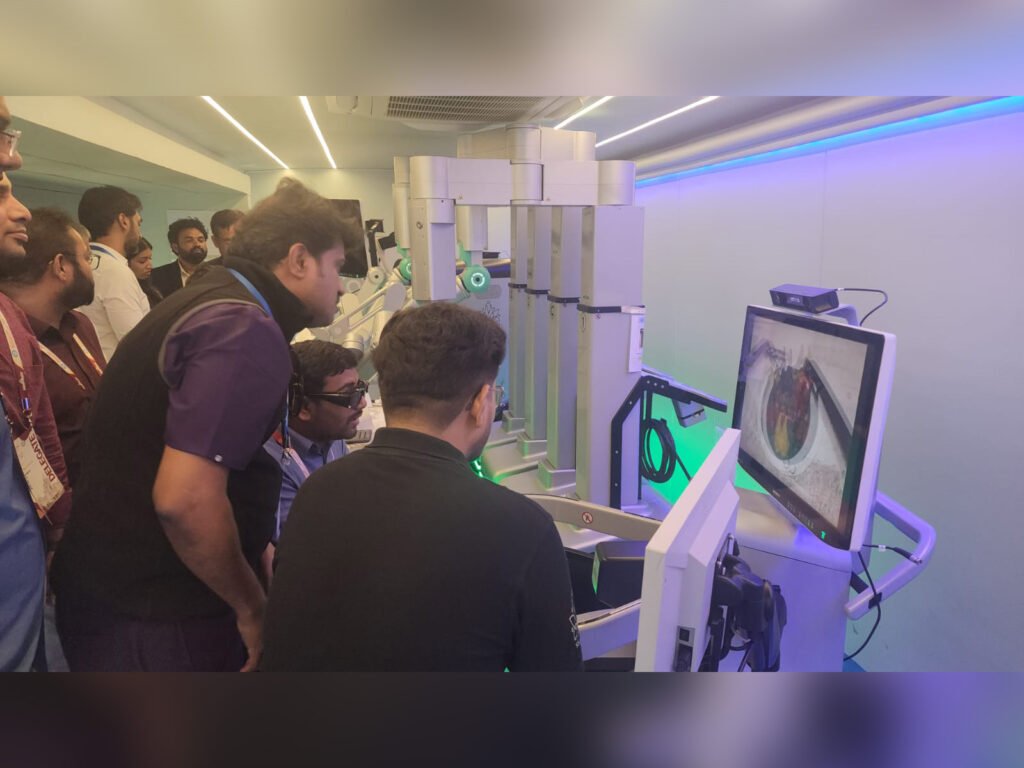
He also trained general surgery residents from Telangana on the SSi Mantra robotic system in the dry lab, providing hands-on exposure to robotic surgical principles and practical experience with the platform.
This created a natural progression from discussion to experience. After examining the role of robotics in pediatric urological surgery from a clinical perspective, the programme gave trainees an opportunity to engage directly with the technology.
For surgeons beginning to develop familiarity with robotic systems, dry-lab training provides a controlled setting in which the fundamentals of robotic surgery can be explored before those skills are applied in the operating environment.
The session also reflected an important aspect of surgical education: technology becomes more useful when clinicians understand how to work with it, rather than simply learning about it.
The SSi Mantra is developed by SS Innovations, founded by Dr. Sudhir Srivastava. The company’s current official materials describe the platform as a surgical robotic system designed around features including 3D visualization, surgeon-controlled instruments and modular robotic arm configurations.
Connecting Surgical Education With Robotic Innovation
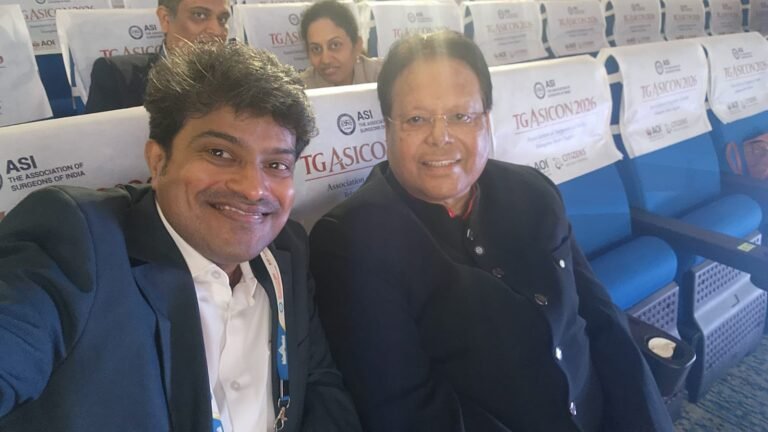
The TGASICON experience also created an opportunity for Dr. Karunakaran to interact with Dr. Sudhir Srivastava, Founder, Chairman and CEO of SS Innovations, the company behind the SSi Mantra platform.
Dr. Karunakaran described the meeting as an opportunity to experience, learn and exchange perspectives on the future of robotic surgery.
For surgeons, conversations between clinical specialists and people involved in the development of robotic technology can provide another perspective on how surgical systems are evolving and how their capabilities can be translated into clinical practice.
For pediatric urology in particular, the discussion around robotic surgery remains closely linked to the realities of operating on smaller anatomy. The important consideration is not simply whether robotics can be introduced, but where the technology can meaningfully complement surgical expertise and the needs of a particular child.
That combination of clinical experience, training and technology was one of the defining features of Dr. Karunakaran’s TGASICON weekend.
TGASICON 2026: Learning That Extends Beyond the Lecture Hall
TGASICON 2026 provided a broader setting for interaction between surgeons at different stages of their careers, with the official conference programme designed around lectures, panel discussions, debates, case-based learning and hands-on workshops.
Within that environment, Dr. Karunakaran’s participation brought a specific pediatric urology and robotic-surgery perspective into the wider surgical discussion.
His presentation addressed the clinical considerations surrounding robotic urological surgery in children. The dry-lab session then shifted the focus toward training and practical familiarity with robotic technology, while his interaction with Dr. Sudhir Srivastava added a professional discussion around the development and future of surgical robotics.
The progression—from presenting, to teaching, to interacting with technology and its innovators—gave the Hyderabad meeting a broader educational dimension for Dr. Karunakaran.
His own reflection on the weekend captures that progression: it was an experience of presenting ideas, learning, teaching, engaging with robotic technology and exchanging perspectives with the people developing it.
Precision, Training and Technology in Pediatric Urology
The wider takeaway from the weekend is straightforward: advances in pediatric robotic surgery depend on more than the availability of a robotic platform.
They also depend on clinicians who understand pediatric anatomy, surgeons who know when a robotic approach is appropriate, and training environments that allow the next generation of surgeons to become familiar with emerging technology.
That was reflected in the different roles Dr. Karunakaran played at TGASICON 2026—from discussing the need for robotic urological surgery in children to training residents on the SSi Mantra system and engaging with one of the leaders behind its development.
For pediatric urology, the objective remains the meaningful application of technology to surgical care. Robotics may provide capabilities that can support precision and minimally invasive surgery, but the clinical value ultimately depends on how those capabilities are integrated with specialist expertise and patient-centred decision-making.
TGASICON 2026 therefore offered Dr. Karunakaran an opportunity not only to share his perspective on pediatric robotic urology, but also to contribute to surgical education and engage with the technologies shaping the next generation of robotic surgery.